Tick Season in Waterloo Region: What Pet Owners Need to Know
If you spend time outdoors with your dog in Waterloo Region, ticks should be on your radar.
Over the past decade, blacklegged ticks (commonly called deer ticks) have expanded throughout Southern Ontario, including areas within and around Waterloo Region. These ticks can carry Lyme disease and other tick-borne illnesses that may affect both people and pets.
The good news? With proper prevention and regular tick checks, most tick-related illnesses can be prevented.
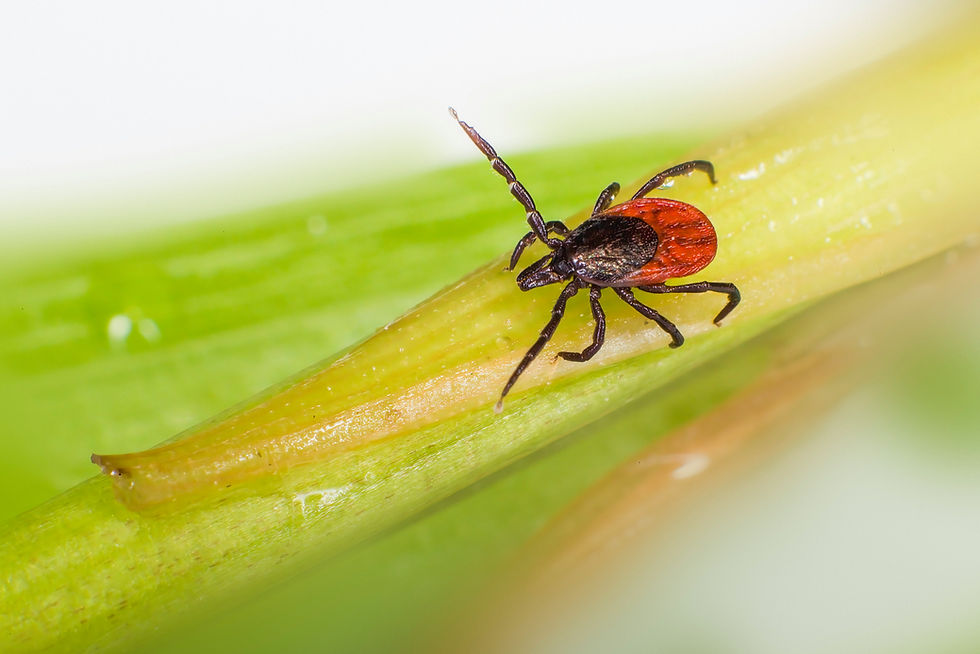
Are Ticks Really a Problem in Waterloo Region?
Yes.
According to Public Health Ontario and Region of Waterloo Public Health, blacklegged ticks are now established throughout much of Southern Ontario, and ticks continue to be reported in Waterloo Region each year. Public Health Ontario’s surveillance maps show expanding tick populations and established risk areas across the province. The Region of Waterloo also advises residents that ticks can be found in wooded areas, tall grass, shrubs, parks, trails, and natural areas throughout the region.¹²
In other words, you don’t need to be deep in the wilderness to encounter a tick.
Where Are Ticks Commonly Found?
Ticks thrive in:
Tall grass
Forest edges
Wooded trails
Leaf litter
Shrubby areas
Conservation areas
Rural properties
Popular local outdoor destinations where tick exposure may occur include:
The Hydrocut
Laurel Creek Conservation Area
Snyder’s Flats
Huron Natural Area
Grand River trail systems
Rural trails and woodlots throughout Waterloo Region
Ticks do not jump or fly. Instead, they wait on vegetation and attach to passing animals or people.
When Is Tick Season?
Many people assume ticks are only active during the summer.
In reality, ticks can be active whenever temperatures are above freezing.
In Waterloo Region, tick activity typically increases during:
Spring
Early summer
Fall
However, mild winter days can also present opportunities for tick exposure.³
Can Dogs Get Lyme Disease?
Yes.
Lyme disease is caused by a bacterium called Borrelia burgdorferi, which is transmitted through the bite of an infected blacklegged tick.
Not every tick carries Lyme disease, and not every tick bite results in infection. In most cases, an infected tick must be attached for approximately 24 hours or longer before transmission occurs.⁴⁵
Some dogs exposed to Lyme disease never develop symptoms. Others may experience:
Lameness that shifts between legs
Joint swelling
Fever
Reduced appetite
Lethargy
Reluctance to exercise
In rare cases, Lyme disease can affect the kidneys and become much more serious.
What About Cats?
Cats can be bitten by ticks and may carry ticks into the home.
Interestingly, cats appear to be less susceptible to Lyme disease than dogs, but tick prevention is still important because ticks can transmit other pathogens and expose human family members.
How Do I Check My Pet for Ticks?
After walks, hikes, or outdoor adventures:
Run your hands over your pet’s entire body
Check around the ears
Examine the face and neck
Look between the toes
Inspect under collars and harnesses
Check the armpits and groin area
Ticks are often very small, especially during immature life stages, so careful inspection is important.
What Should I Do If I Find a Tick?
If you find a tick:
Use fine-tipped tweezers or a tick-removal tool.
Grasp the tick as close to the skin as possible.
Pull upward steadily without twisting.
Clean the area afterward.
Monitor your pet for signs of illness.
If you’re unsure whether you’ve removed the tick completely, or if your pet develops symptoms afterward, contact your veterinarian.
Prevention Is the Best Protection
Tick prevention is far easier than treating tick-borne disease.
Depending on your pet’s lifestyle and risk factors, we may recommend:
Monthly tick prevention products
Annual Lyme vaccination for dogs when appropriate
Routine wellness examinations
Regular tick checks at home
Every pet’s risk profile is different, and our team can help determine the best prevention plan for your family.
Why Wellness Exams Matter
Many tick-borne diseases can initially cause subtle signs that are easy to miss.
Routine wellness examinations allow us to:
Detect health changes earlier
Discuss parasite prevention
Monitor for signs of tick-borne illness
Recommend appropriate screening tests
Early detection often leads to better outcomes.
The Bottom Line
Ticks are now a reality of life in Waterloo Region, but they don’t have to prevent you and your pet from enjoying the outdoors.
By using effective tick prevention, performing regular tick checks, and staying informed about local risks, you can significantly reduce your pet’s chances of developing a tick-borne illness.
At Bridge Street Veterinary Hospital, we help dogs and cats stay protected through preventive care, wellness exams, parasite prevention, and diagnostic testing. If you have questions about ticks, Lyme disease, or the best prevention strategy for your pet, our team is here to help.
We proudly care for pets and their families throughout Waterloo, Kitchener, and the surrounding communities.


Comments